

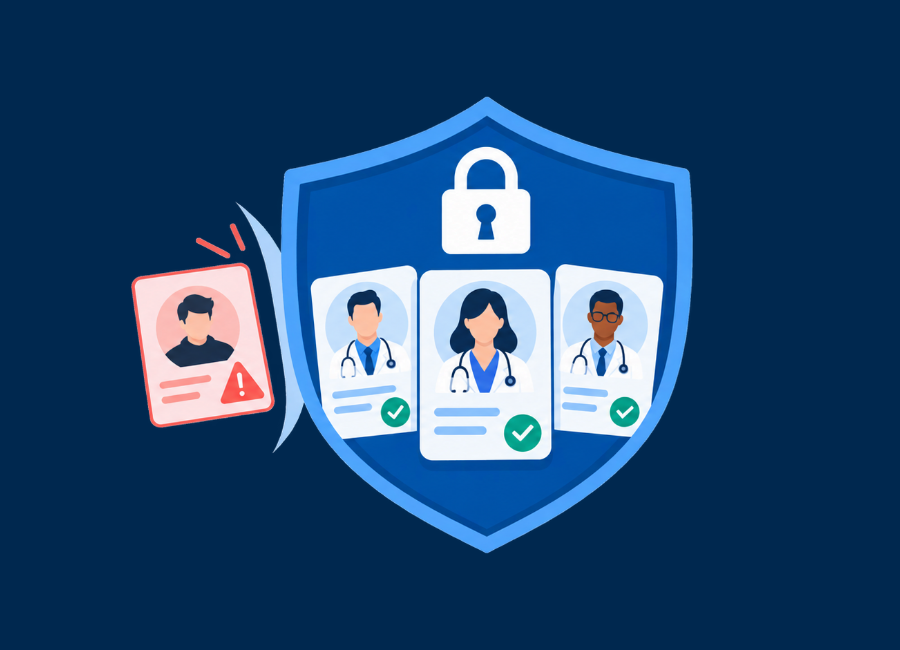
Healthcare lead generation in 2026 is no longer about collecting a large number of contacts and sending the same message to everyone. For healthcare marketers, medical device companies, pharmaceutical businesses, healthcare technology providers, staffing firms, and B2B service companies, reaching the right decision-makers requires accurate data, precise targeting, and responsible outreach.
With healthcare buying committees becoming more complex, outdated contact records and poor segmentation can quickly lead to wasted marketing spend and missed opportunities. Businesses also need to understand how privacy, email marketing, and data-handling requirements may apply to their campaigns.
This guide explains what to look for in healthcare lead generation companies, how to evaluate healthcare contact data, and the key data and compliance risks businesses should consider before launching a B2B healthcare campaign.
1. What Is Healthcare Lead Generation?
Healthcare lead generation is the process of identifying and engaging potential business buyers across the healthcare industry.
Unlike patient acquisition, healthcare B2B lead generation focuses on professionals, organizations, and decision-makers who may purchase products or services.
These prospects can include:
- Hospitals and health systems
- Physician practices
- Specialty clinics
- Diagnostic laboratories
- Pharmaceutical companies
- Medical device manufacturers
- Healthcare technology companies
- Medical staffing firms
- Nursing and senior-care organizations
- Healthcare consulting companies
- Insurance organizations
- Healthcare service providers
For example, a medical device company may want to reach procurement managers and clinical decision-makers, while a healthcare software company may need CIOs, IT directors, revenue-cycle leaders, or practice administrators.
The objective is not simply to collect more contacts.
It is to identify relevant healthcare buyers and decision-makers who match your target market.
2. Why Healthcare Lead Generation Is Different in 2026
Healthcare lead generation has become more complex as buying decisions often involve executives, procurement teams, IT leaders, finance departments, clinicians, and other stakeholders.
For B2B marketers, a broad healthcare database is not enough. Campaigns need to be segmented by job title, specialty, organization type, department, geography, and decision-making role to reach relevant prospects.
Data quality is equally important. Outdated emails, incorrect job titles, duplicate records, and incomplete information can waste marketing budgets and reduce campaign performance.
This is why businesses increasingly use healthcare sales prospecting strategies based on specific buyer profiles instead of broad outreach.
Healthcare marketers also need to distinguish B2B prospecting from patient marketing. Professional business contact data is different from patient health information, so campaigns should use appropriate data and responsible outreach practices.
Healthcare buying involves multiple stakeholders
| Buyer Role | Typical Priorities |
|---|---|
| CIO / IT Director | Technology integration, security, scalability, and infrastructure |
| CMIO / Clinical Informatics Leader | Clinical workflows, technology adoption, and provider experience |
| CISO / Compliance Officer | Cybersecurity, privacy, risk management, and compliance |
| CFO / Finance Leader | Cost savings, ROI, financial impact, and budget planning |
| Procurement Director | Vendor selection, pricing, contracts, and purchasing |
| Practice Administrator | Operations, staffing, scheduling, and practice efficiency |
| Revenue Cycle Leader | Billing, claims, collections, reimbursement, and revenue performance |
| Clinical Department Leader | Workflow improvement, usability, outcomes, and team adoption |

3. Does HIPAA Apply to Healthcare Lead Generation?
HIPAA does not automatically apply to every healthcare lead generation campaign. It depends on the type of information being used and whether the organizations involved are covered entities or business associates under HIPAA.
For typical B2B healthcare lead generation, the data may include professional information such as:
- Name
- Job title
- Department
- Business email
- Business phone
- Organization
- Medical specialty
- Facility type
- Business location
This professional contact information is different from protected health information (PHI), such as a patient’s diagnosis, treatment history, insurance information, medical records, or information revealing an individual’s health condition.
HIPAA becomes particularly important when a lead-generation process involves PHI. HHS states that the HIPAA Privacy Rule generally requires authorization for uses or disclosures of PHI for marketing, subject to limited exceptions.
What Healthcare Lead Generation Should Avoid
A B2B healthcare campaign should not build prospects around patient-level information such as:
- Patient names
- Medical conditions
- Treatment history
- Prescription information
- Insurance details
- Appointment information
- Patient identifiers
- Information suggesting
- knowledge of someone’s health status
A strong healthcare lead-generation program should be designed to avoid PHI entirely unless the organization has a defined, secure, and legally reviewed workflow for handling it.
A Simple Rule for Healthcare Lead Generation
When building a healthcare sales database, focus on who the professional is, where they work, what role they hold, and whether they influence the purchase—not on their personal health information.
For multinational campaigns, additional privacy and electronic-marketing laws may also apply depending on the country, recipient, data, and communication channel.
4. How MedicoLeads Supports Targeted Healthcare Prospecting
MedicoLeads can help companies develop more focused healthcare outreach campaigns by providing healthcare mailing lists and professional contact data aligned with a defined ideal customer profile.
Instead of marketing to “healthcare” as one broad category, businesses can identify specific audiences, such as:
- Hospital CEOs and executive leadership teams
- CIOs, CTOs, CMIOs, and IT decision-makers
- Physicians by specialty
- Practice owners and clinic administrators
- Procurement and purchasing managers
- Revenue-cycle management leaders
- Healthcare compliance officers
- Medical device buyers
- Pharmaceutical decision-makers
- Nursing-home and senior-care administrators
- Healthcare staffing decision-makers
- Telehealth and digital-health executives
- Laboratory and diagnostic-center contacts
A segmented database supports more relevant messaging, better sales conversations, and a stronger return on outreach investment.
5. How to Evaluate Healthcare Lead Generation Companies
Not every provider offering healthcare lead generation services or a healthcare leads database follows the same standards. Before purchasing a list or launching a campaign, assess the vendor’s data quality, sourcing method, segmentation capabilities, and privacy approach.
1. Ask about data sources
2. Check Segmentation Capabilities
3. Avoid Unclear Compliance Claims
Be cautious of broad claims such as “HIPAA-certified contact lists.” HIPAA applies to covered entities, business associates, and protected health information; it is not a general certification for B2B lead databases. Instead, ask about actual data practices, security, suppression, opt-out handling, and how professional contact data is separated from patient information.
4. Review Opt-Out and Suppression Practices
A reliable provider should have a clear process for handling unsubscribe requests, corrections, and suppression. This helps prevent contacts who have opted out from being added back into future campaigns. Strong suppression practices also support better email deliverability and reduce unnecessary complaints.
5. Evaluate Sample Data Before Buying
Before purchasing a large healthcare contact database, request a sample that matches your target audience. Check job titles, company details, business emails, phone numbers, specialties, locations, and other important fields. Reviewing sample data helps you determine whether the database is accurate, relevant, and suitable for your sales campaign before making a larger purchase.
6. Healthcare Compliance Risks to Avoid
Healthcare marketing teams should work closely with privacy, legal, and information-security teams when a campaign may touch sensitive data or patient-facing workflows.
Risk 1: Collecting PHI through standard lead forms
A standard marketing form may become a compliance concern if it asks visitors to describe symptoms, diagnoses, treatment history, insurance status, or patient-specific needs.
For B2B campaigns, collect only information needed to qualify a professional prospect, such as:
- Name
- Business email
- Job title
- Organization
- Department
- Work phone number
- Organization size
- Business challenge category
Avoid open-ended form fields that invite respondents to share sensitive patient or clinical details.
Risk 2: Sending patient information through sales tools
Do not allow patient records, appointment details, diagnoses, screenshots, or clinical documents to flow into standard CRM systems, email sequences, spreadsheets, ad platforms, or chat tools without appropriate safeguards.
If your product or service requires discussion of patient data later in the sales process, establish a secure, approved workflow before that point.
Risk 3: Using tracking tools without review
Marketing pixels, session-recording tools, analytics scripts, call tracking, chatbots, and conversion tags can create privacy risks when installed on patient-facing healthcare pages.
Healthcare organizations should audit how these tools collect, transmit, and store visitor data—especially on pages related to appointment booking, treatment information, symptom searches, patient portals, billing, and healthcare services.
Risk 4: Buying lists with unknown provenance
Never assume a large healthcare list is trustworthy because it includes physician names, hospital records, or executive contacts.
If the provider cannot answer where data comes from, when it was verified, how it was updated, or how opt-outs are honored, look for another vendor.
Risk 5: Treating all healthcare contacts the same
A hospital CEO, medical practice administrator, nurse manager, and chief information officer do not have the same responsibilities or buying priorities.
Poor segmentation can lead to irrelevant outreach. Role-based segmentation helps sales teams deliver more relevant messages to the right healthcare decision makers.
6. Healthcare Email Marketing Best Practices
A successful healthcare email campaign should be respectful, targeted, and value-driven.
Start with a defined ideal customer profile
Before buying data, define the organizations that are most likely to benefit from your solution.
Your ideal customer profile may include:
- Specialty hospitals with 100+ beds
- Independent physician practices with multiple locations
- Behavioral health providers in selected states
- Diagnostic laboratories with regional operations
- Healthcare SaaS companies serving providers
- Medical device manufacturers with field-service teams
- Long-term care organizations with staffing challenges
- The more specific your ICP, the more useful your healthcare contact list becomes.
The more specific your ICP, the more useful your healthcare email list and healthcare prospect list become.
Businesses can then build campaigns around relevant buyer roles instead of sending the same message to every healthcare professional.
7. Why Choose MedicoLeads?
A healthcare lead generation campaign delivers value only when the data is accurate, relevant, and regularly maintained. MedicoLeads helps businesses reach healthcare professionals and decision-makers through targeted healthcare contact data built for B2B sales and marketing.
Our database includes 14M+ global healthcare contacts across hospitals, clinics, physician practices, laboratories, and other healthcare organizations. Records are supported by 40+ data attributes and regular revalidation, making it easier to build focused campaigns around the right healthcare audiences.
With MedicoLeads, you receive:
- 95% data accuracy
- 85% email deliverability
- 100% opt-in business contacts
- Data refreshed every 45 days
- 40+ targeting attributes
- 7-tier AI and human verification
- Custom segmentation by specialty, geography, organization type, and job role
- CRM-ready data for sales and marketing workflows
- Dedicated support for customized data requirements
Whether your goal is healthcare B2B lead generation, account-based marketing, product promotion, event outreach, or market expansion, MedicoLeads provides healthcare contact data designed to help you reach relevant buyers and build more targeted campaigns.
Conclusion
Choosing the right healthcare lead generation company starts with the quality of its data. Accurate contacts, clear sourcing, regular verification, precise segmentation, and responsible outreach practices can make a significant difference to B2B healthcare campaigns.
MedicoLeads provides 14M+ global healthcare contacts, 40+ data attributes, regular 45-day revalidation, and targeted segmentation by specialty, role, organization, and geography.
Whether you are focused on lead generation, account-based marketing, sales prospecting, or market expansion, the right healthcare data can help your team reach more relevant decision-makers and build targeted campaigns.
Ready to connect with the right healthcare buyers? Get a customized MedicoLeads healthcare contact list for your target market.
FAQs
1. What do healthcare lead generation companies do?
2. Are healthcare email lists legal for B2B outreach?
3. Does HIPAA restrict cold emailing healthcare professionals?
4. Which healthcare contacts are safe to target for B2B marketing?
5. What should I verify before buying a healthcare contact database?
Check data sources, validation frequency, accuracy of titles and contact details, segmentation options, bounce and opt-out handling, and whether sample records match your ideal customer profile.
6. What are the top compliance pitfalls in healthcare lead generation?
Common risks include collecting PHI through forms or chatbots, using tracking pixels on patient-facing pages without review, buying lists with unclear sources, relying on vague “HIPAA-certified” claims, ignoring opt-outs, and sending patient information into standard CRM or sales tools.