




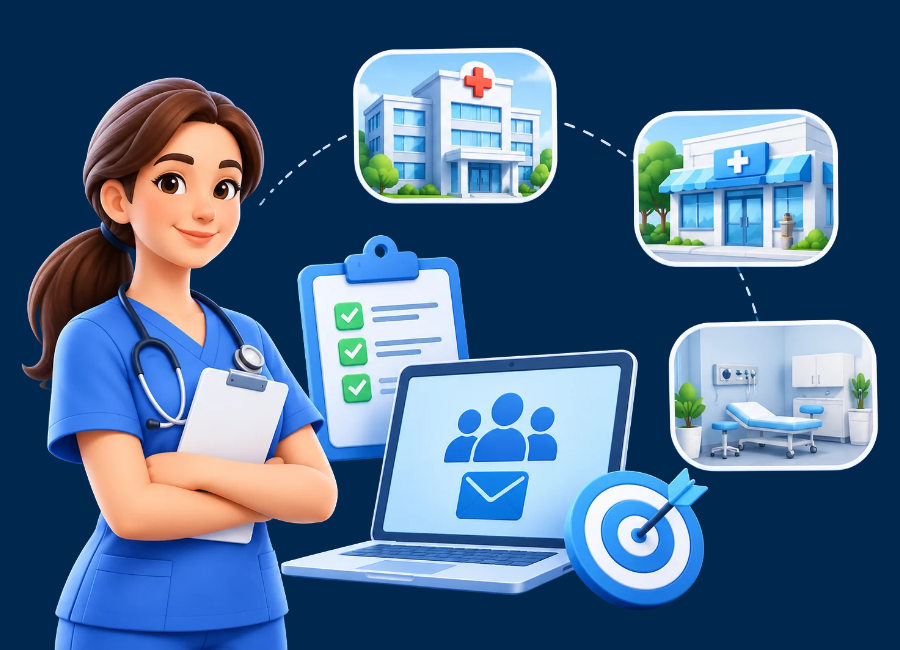
Registered nurses play an important role in delivering patient care across hospitals, clinics, and private medical practices. They handle patient monitoring, clinical documentation, treatment coordination, and other essential healthcare responsibilities.
For businesses selling medical equipment, pharmaceutical products, healthcare software, diagnostic solutions, and medical supplies, reaching the right nursing professionals can support product awareness and business growth. However, finding nurses across different healthcare settings can be challenging without a focused outreach strategy.
A targeted Registered Nurses Email List helps businesses connect with nursing professionals based on their specialties, job titles, workplace types, and geographic locations. It makes it easier to identify relevant contacts and plan focused B2B marketing campaigns.
In this guide, we will explore practical ways to reach registered nurses working in hospitals, clinics, and private practices.
Understand Where Registered Nurses Work
Before reaching registered nurses, businesses should understand the different healthcare environments where they work. Each setting has different clinical requirements, responsibilities, and technology needs.
Registered Nurses Working in Hospitals
Hospitals employ nurses across multiple departments and medical specialties. These professionals support patient care, coordinate with doctors, monitor health conditions, and use different medical technologies.
Common hospital nursing professionals include:
- Staff Nurses
- Critical Care Nurses
- Emergency Room Nurses
- Operating Room Nurses
- Intensive Care Unit Nurses
- Nurse Managers
- Oncology Nurses
Businesses offering patient monitoring devices, surgical equipment, clinical software, and hospital supplies can target relevant nursing professionals based on their roles and departments.
Registered Nurses Working in Clinics
Clinics generally provide specialized or primary healthcare services. Nurses working in these facilities assist with patient assessments, clinical procedures, treatment coordination, and follow-up care.
Common clinic-based nursing professionals include:
- Primary Care Nurses
- Outpatient Nurses
- Ambulatory Care Nurses
- Dermatology Nurses
- Cardiology Nurses
- Pediatric Nurses
Healthcare companies can reach these professionals to introduce diagnostic products, medical devices, clinical applications, and other relevant healthcare solutions.
Registered Nurses Working in Private Practices
Private medical practices often employ nurses to support physicians, manage patient appointments, assist with clinical procedures, and maintain patient records.
Some common nursing professionals in private practices include:
- Family Practice Nurses
- Private Practice Nurses
- Dermatology Practice Nurses
- Cardiology Practice Nurses
- Specialty Practice Nurses
Businesses offering practice management software, medical supplies, diagnostic equipment, and clinical communication solutions can connect with relevant professionals in these settings.
Identify the Right Registered Nurses for Your Business
Reaching a large number of healthcare professionals does not always produce relevant business opportunities. Companies should identify nursing professionals who align with their products and services.
Here are some important targeting methods.
- Target by Nursing Specialty: Identify nurses based on clinical specialties such as critical care, oncology, pediatrics, emergency nursing, and surgical nursing.
- Target by Job Title: Focus on staff nurses, nurse managers, clinical coordinators, and other relevant professional roles.
- Target by Healthcare Facility: Separate contacts working in hospitals, outpatient centers, specialty clinics, and private practices.
- Target by Geographic Location: Filter nursing professionals by country, state, city, or region to support location-specific campaigns.
- Target by Professional Credentials: Use available professional qualifications and credentials to narrow the audience when relevant to your products.
This approach helps businesses build a more focused Registered Nurses Contact List instead of relying on a broad healthcare database.

7 Effective Ways to Reach Registered Nurses
Businesses can use multiple outreach methods to connect with registered nurses. The right approach depends on their target audience, products, and marketing objectives.
1. Use a Targeted Registered Nurses Email List
A targeted Registered Nurses Email List helps businesses identify nursing professionals across different healthcare facilities.
Instead of manually searching for individual contacts, companies can use a structured RN Email List to segment their audience based on specialty, workplace, job title, and location.
This is useful for medical equipment manufacturers, healthcare technology companies, pharmaceutical suppliers, and medical distributors looking to introduce relevant products.
2. Segment Nurses by Healthcare Workplace
Hospital nurses, clinic nurses, and private practice nurses have different professional responsibilities.
Businesses should create separate audience segments for each healthcare setting.
For example, a company selling hospital patient monitoring systems may focus on critical care nurses, while a practice management software provider may target nurses working in private medical practices.
3. Use Professional Email Marketing Campaigns
Email marketing provides an opportunity to share relevant product information and educational resources with nursing professionals.
- Businesses can create campaigns around:
- New medical equipment and product launches.
- Healthcare software demonstrations.
- Clinical technology updates.
- Educational webinars and training sessions.
- Medical supply and diagnostic product information.
Keep messages relevant, informative, and easy to understand.
4. Attend Healthcare Events and Nursing Conferences
Healthcare exhibitions, nursing conferences, and medical industry events provide opportunities to connect with nursing professionals.
Businesses can use these events to demonstrate products, introduce new solutions, and develop professional relationships.
5. Connect Through LinkedIn and Professional Networks
LinkedIn can help businesses identify nursing professionals and healthcare industry communities.
Companies can share useful healthcare content, participate in relevant discussions, and introduce solutions through appropriate professional networking.
6. Share Educational Content and Webinars
Registered nurses regularly work with medical equipment, digital applications, and clinical technologies.
Healthcare businesses can organize educational webinars, share product guides, and publish informative content to explain how their solutions work.
7. Build Relationships with Nursing Associations
Professional nursing associations and healthcare communities offer opportunities to understand industry developments and connect with nursing professionals.
Businesses can explore relevant events, educational partnerships, and networking opportunities to build relationships within the nursing industry.
How to Reach Nurses Based on Their Healthcare Workplace
Workplace-based targeting helps businesses connect with nursing professionals who may have different product and service requirements.
The following table explains how companies can approach nurses across different healthcare environments.
| Healthcare Setting | Target Nursing Professionals | Relevant Business Outreach |
|---|---|---|
|
Hospitals |
Staff Nurses, ICU Nurses, Nurse Managers |
Medical equipment, clinical software, patient monitoring systems |
|
Primary Care Clinics |
Primary Care Nurses, Practice Nurses |
Diagnostic products, healthcare software |
|
Specialty Clinics |
Oncology, Cardiology, Dermatology Nurses |
Specialty medical devices and clinical solutions |
|
Private Practices |
Family Practice Nurses, Private Practice Nurses |
Medical supplies, practice management software |
|
Outpatient Centers |
Ambulatory Care Nurses |
Patient monitoring and workflow solutions |
|
Rehabilitation Facilities |
Rehabilitation Nurses |
Patient care equipment and rehabilitation technology |
|
Nursing Homes |
Long-Term Care Nurses |
Patient monitoring, medical supplies, and care management solutions |
Best Practices for Effective Registered Nurses Outreach
Reaching nursing professionals is only the first step. Businesses should also make their communication relevant and useful.
Follow these practices to improve your outreach strategy:
- Personalize Your Emails: Address professionals appropriately and tailor messages to their specialty or workplace.
- Use Relevant Subject Lines: Make the purpose of your email clear.
- Keep Messages Short: Nurses have demanding schedules, so communicate important information without unnecessary details.
- Highlight Practical Benefits: Explain how your product or service may support clinical workflows or professional requirements.
- Share Useful Resources: Include product guides, educational content, and webinar invitations.
- Maintain Data Quality: Review contact records regularly to reduce outdated information.
- Follow Marketing Regulations: Ensure your email campaigns comply with applicable privacy and marketing requirements, including consent, identification, and opt-out obligations.
A relevant and professional communication strategy can help businesses establish better relationships with healthcare audiences.
How MedicoLeads Supports Registered Nurse Outreach
MedicoLeads helps businesses connect with registered nurses across hospitals, clinics, private practices, and other healthcare facilities through targeted contact databases. Its Registered Nurses Email List supports focused B2B marketing, product promotions, and healthcare lead generation.
Key features include:
- 100% Opt-In Data: Access professionally sourced opt-in healthcare contacts.
- 7-Tier Verification: Multiple verification steps to support contact quality.
- 95%+ Data Accuracy: Access relevant and accurate nursing contact information.
- 45-Day Revalidation: Contact records are revalidated every 45 days.
- Specialty-Based Targeting: Reach nurses based on their clinical specialties and job roles.
- Location-Based Segmentation: Target nursing professionals by country, state, and city.
- Flexible Data Delivery: Receive contact lists in CSV, XLS, and API formats.
- Custom List Building: Get contact data based on your specific business requirements.
Request a free Registered Nurses Email List sample from MedicoLeads to explore your target audience.
Conclusion
Reaching registered nurses across hospitals, clinics, and private practices requires a focused approach. Each healthcare setting has different clinical requirements, professional responsibilities, and technology needs.
A targeted Registered Nurses Email List helps businesses identify relevant nursing professionals based on their specialties, workplaces, and geographic locations. It also supports organized B2B outreach, healthcare product promotion, and lead generation.
By selecting a reliable database provider and using relevant communication strategies, healthcare businesses can connect with nursing professionals who align with their products and services.
FAQs
Where is the easiest place to reach registered nurses?
Clinics and ambulatory practices, usually. Their mail systems filter less aggressively than hospital systems, their work is scheduled rather than continuous so they can read during the day, and the approval chain is short enough that the reader may be able to act. Hospitals hold more nurses but are harder to reach cleanly.
Which nurse job titles should I target for a purchasing decision?
Nurse Manager, Director of Nursing and Chief Nursing Officer hold real budget authority. Clinical Nurse Educators control training and certification spend. Staff nurses and charge nurses are the right audience for recruitment, education and awareness, but asking them for a purchasing conversation wastes the contact.
How do I find nurses working in private practices?
Through compiled business sources that tie a named individual to the practice rather than listing a general practice mailbox. Small practices rarely publish staff directories, so check what share of the records in any sample are real names versus info@ or frontdesk@ addresses before you buy.
Does state licensure affect how I target nurses?
Yes, more than for most healthcare roles. Nursing licences are issued by state, so recruitment, travel assignment and continuing education offers only make sense within the states where the nurse is licensed or where a compact licence applies. Filter by state before sending anything licensure dependent.
What is a realistic reply rate for nurse outreach?
It varies enough by setting that a single benchmark is misleading. The useful approach is to measure reply rate separately for hospital, ambulatory and private practice audiences in your own campaigns and compare them against each other. If all three are identical, your segmentation is not doing any work.
When is the best time to email a nurse?
For hospital nurses, around shift boundaries and on days off, since they are not at a desk during the day. For ambulatory, private practice and long-term care audiences, ordinary business hours work normally. Track time to first reply per setting rather than relying on a general best-time rule.
Should I use personal or work email addresses for nurses?
Work addresses, for both deliverability and propriety. Professional contact data belongs in a business outreach programme; personal addresses do not, and using them damages trust in a profession where people compare notes across employers. Ask any provider to confirm which type their records contain.
How often should a registered nurse list be refreshed?
More often than most healthcare files. Nurses change employers and settings frequently, so treat records older than a few months as needing revalidation before a send, and ask for a per record last verified date so you can filter by recency rather than refreshing the whole file blindly.